






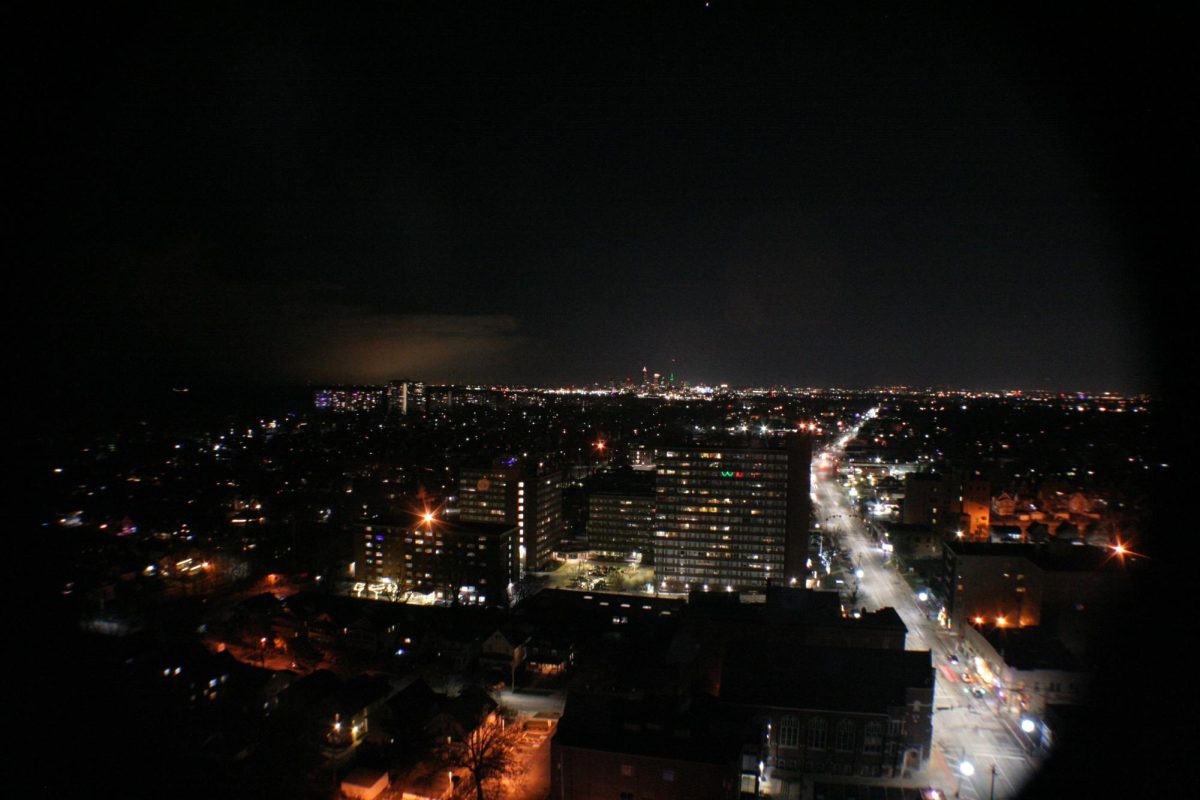

Cleveland was once one of the most prominent cities in America. From the 1890s through the 1950s, it was one of the largest cities in the country, with hundreds of thousands of people, acting as a major cultural hub.
In 1835, Otto Moser’s Restaurant opened in Playhouse Square. World-class and unknown performers would pass through, each of whom was photographed by Otto Moser. Most of them performed in a style called Vaudeville.
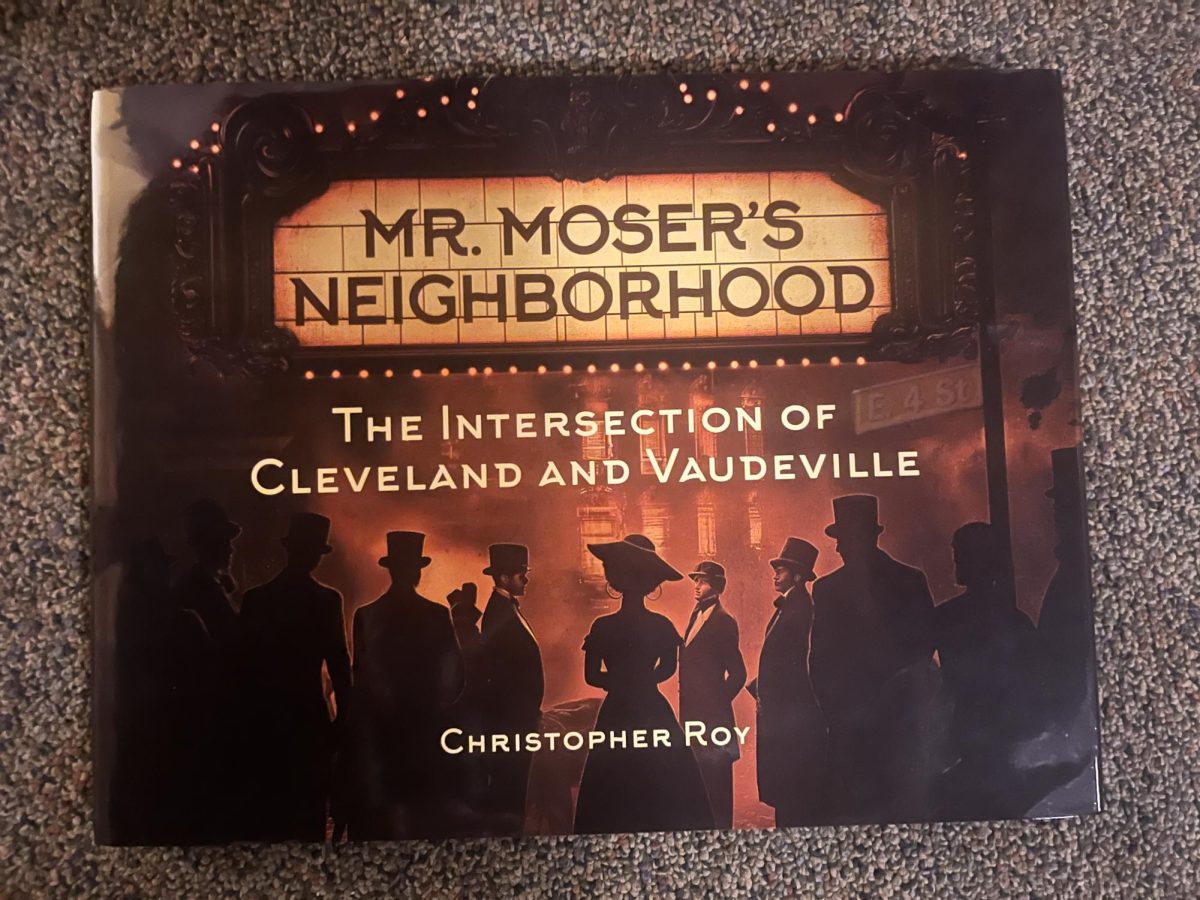
This week, the Lakewood Public Library explored Moser’s legacy through a “Meet the Author” event with author Christopher Roy and his book, Mr. Moser’s Neighborhood: The Intersection of Cleveland and Vaudeville.
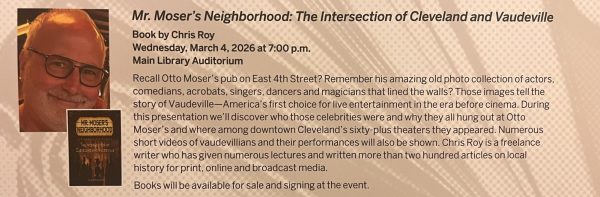
Roy works in historical research and volunteer work, with a focus on Cleveland. “I got involved in this particular subject area because I was volunteering at Cleveland State, and more than 600 pictures were donated to the Cleveland State University Special Collection Library,” Roy said. “Those pictures had been taken off a wall at a restaurant called Otto Moser’s.”
The textbook definition of Vaudeville is a compendium of 8 to 12 separate, unrelated live acts, each providing a different form of entertainment. Then there’s Roy’s simpler definition: “Vaudeville was everything!”
Before Roy wrote his book, there was not much insight into Vaudeville in Cleveland. He took the 600+ photos and, with countless hours of research, facial recognition software, and studying, he was able to identify every person in the photos. His discoveries ranged from well-known actresses such as Judy Garland and Bessie Smith to lesser-known performers like Lillian Shaw and George Primrose.
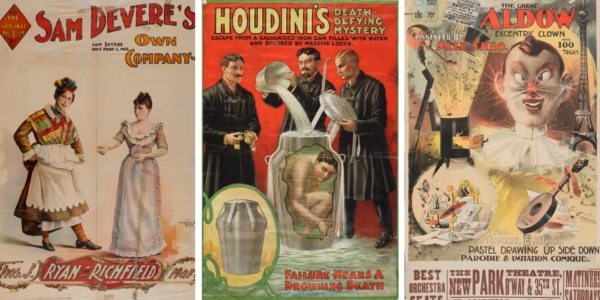
During his presentation on March 4, Roy explained the importance of Cleveland for Vaudeville performances. As many of the shows passed through Cleveland due to its proximity to other profitable cities like Erie, Toledo, and Pittsburgh, it became a common place for traveling shows.
Vaudeville was accessible to everyone, with tickets costing as low as five cents. They had simple stage designs and could employ anyone with talent, contributing to Cleveland’s diverse cultural experience.
The event drew about 20 attendees, many of whom shared a connection with Vaudeville or Otto Moser’s Restaurant. “I don’t have a personal connection to Vaudeville, but I used to go to Otto Moser’s when it was open, and they had the best tongue sandwiches,” said Greg Prilgram.
For others, the event provided a way to honor family memories. “My parents had a connection and love for Vaudeville, and that is why I am here tonight,” said Jeremy Lancaster. He noted that hearing stories about Vaudeville growing up sparked his curiosity about the performers and theaters that once filled cities like Cleveland.
After 125 years and four different owners, Otto Moser’s eventually closed its doors. While the famous sandwiches are no longer available, the memory of the restaurant and the history of Vaudeville still live on through Roy’s research.
The Lakewood Public Library’s “Meet the Author” program continues to provide community connections with local history and creators. Be sure to look out for the next opportunity to attend and learn more about the story of the area.