

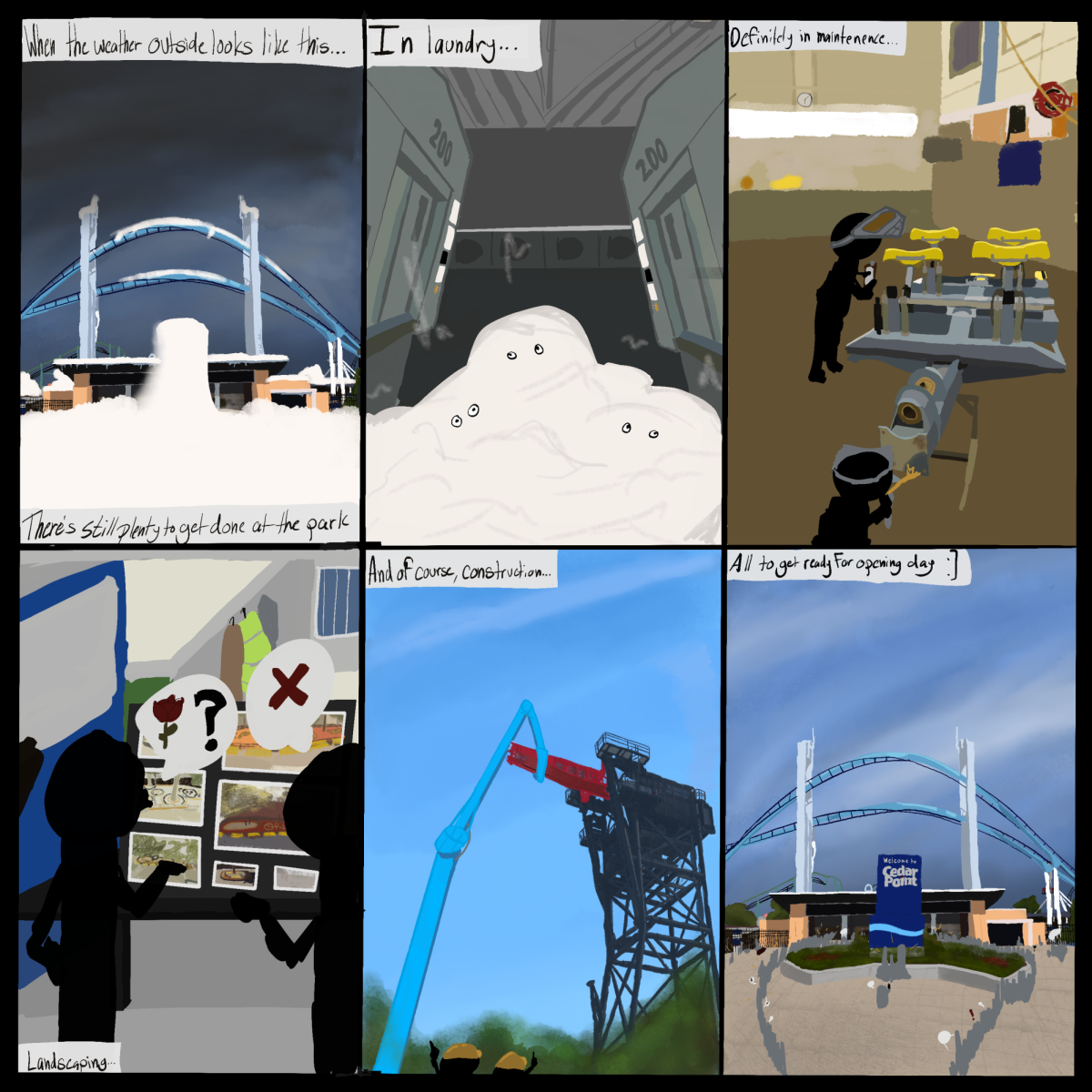
For more than 27 years, Lakewood High School’s fundamental physics, regular physics, and AP physics students have finished the year off by taking a trip to Cedar Point. This trip gives students the opportunity to continue learning outside of the classroom and to demonstrate a real-world application of physics.
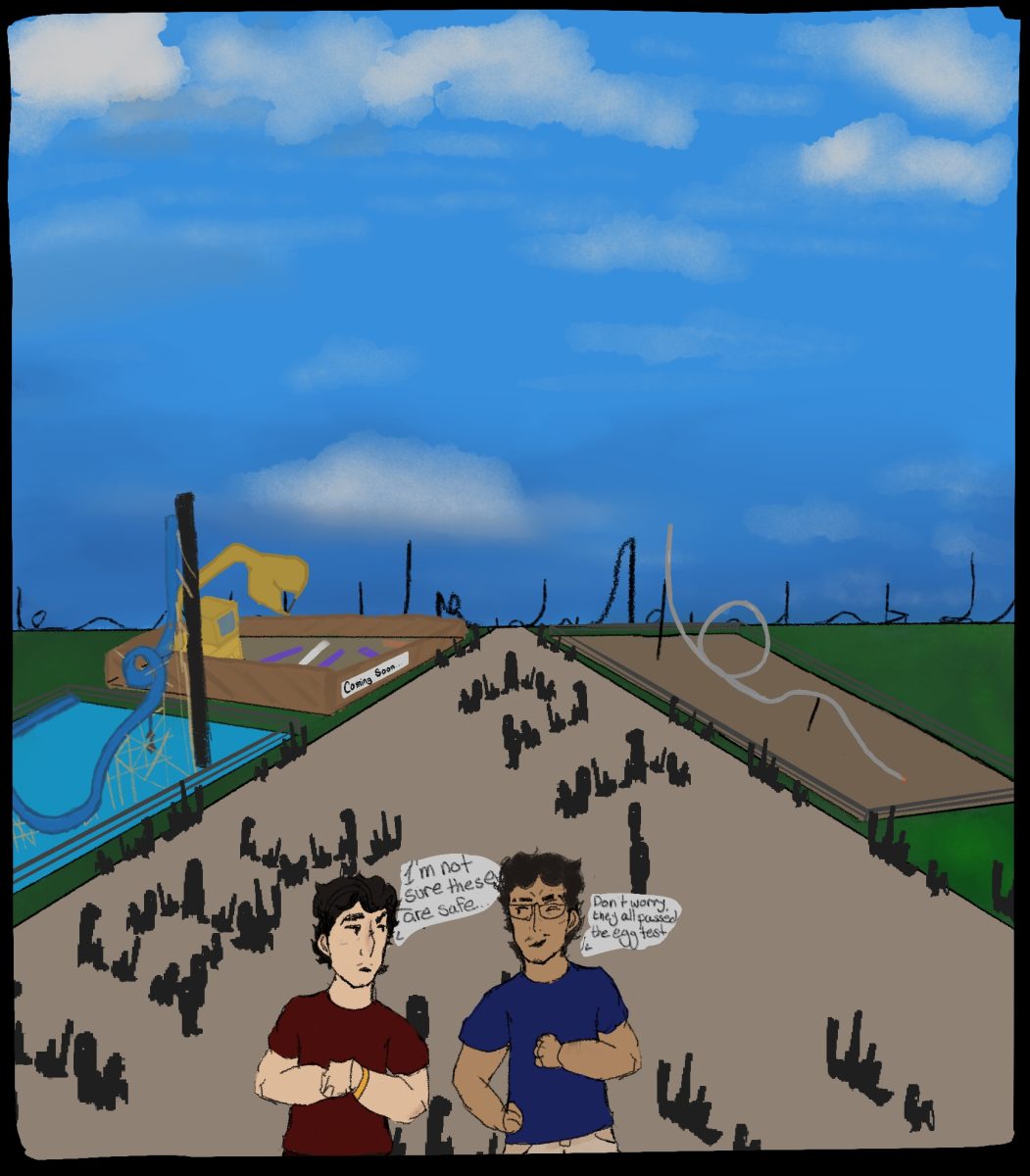
For the final quarter project, students had to construct a roller coaster using any material, with the goal of a ball bearing successfully traveling from start to finish without falling off the track. A raw egg would also be placed at the very end of each coaster to determine if the roller coaster had a slow and safe finish, demonstrated by an uncracked egg.
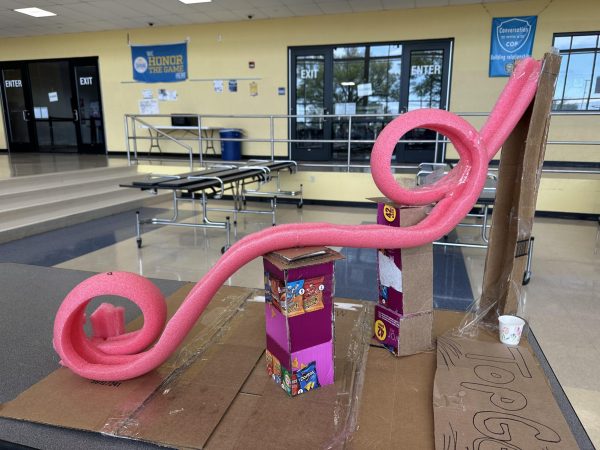
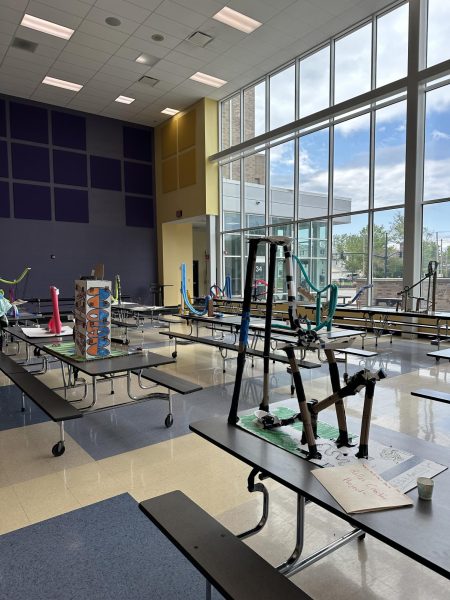
The coasters were required to have a meter-high first hill, a half a meter second hill, and a loop implemented into it, along with a theme and creative name for the design. Students incorporated fun themes and materials to build their coasters, with many being built out of pool noodles, solo cups, and even playing cards.
After completing the projects, students displayed their work during the Physics Department’s annual Roller Coaster Open House on May 13 in the Lakewood High School cafeteria. The event allowed students, families, teachers, and community members to view the coasters. Attendees could also vote for their favorites in four categories: most stylish, best design, most creative, and best of show. Students who attended the event also earned extra credit.
Gwendolyn Hongosh, Maya Trempe, Grace Lowmiller, and Alexandra Adamov won best design with a coaster made out of pool noodles and a “cat-astrophic” theme.
“It was very cool to win an award, and we’re very proud of our work,” Adamov said.
This year, the Cedar Point trip took place on May 15, with students leaving at 8 a.m. and heading home at 8 p.m. While at Cedar Point, students were given the option of ten different ride styles with the task of filling out information about 2, 3, or 4 ride styles (assigned depending on the student’s class).
The assignments focused on real-world applications of concepts students learned throughout the school year, including velocity, acceleration, momentum, and energy transfer. Students were able to better understand how physics applies outside the classroom by observing and experiencing the roller coasters firsthand.
Despite the academic work, students still had plenty of time to enjoy the rides and spend time with classmates. Many students viewed this trip as one of the highlights of the school year.
By attending the Cedar Point trip, the students “could see examples of gravity, momentum, and energy transfer throughout the roller coasters,” said Dion Pipa, a physics student who attended the trip.
The physics department hosts many interactive events throughout the year, including the annual boat regatta earlier in the school year. Events such as the boat regatta, roller coaster project, and the Cedar Point trip are important as they encourage students in physics to engage more with the class by making lessons more enjoyable. It also increases excitement to take physics classes and allows students a fun ending to the year while still including learning.
Physics teacher David Hille said his favorite part of the roller coaster unit was the Cedar Point trip because “everybody looks forward to it and it is close to the end of the school year.”
“I would definitely recommend going because it is a fun experience and it helps you see physics in a completely different way,” said Pipa.
The trip was both memorable and educational for everyone, adding fun to an academically challenging course.