










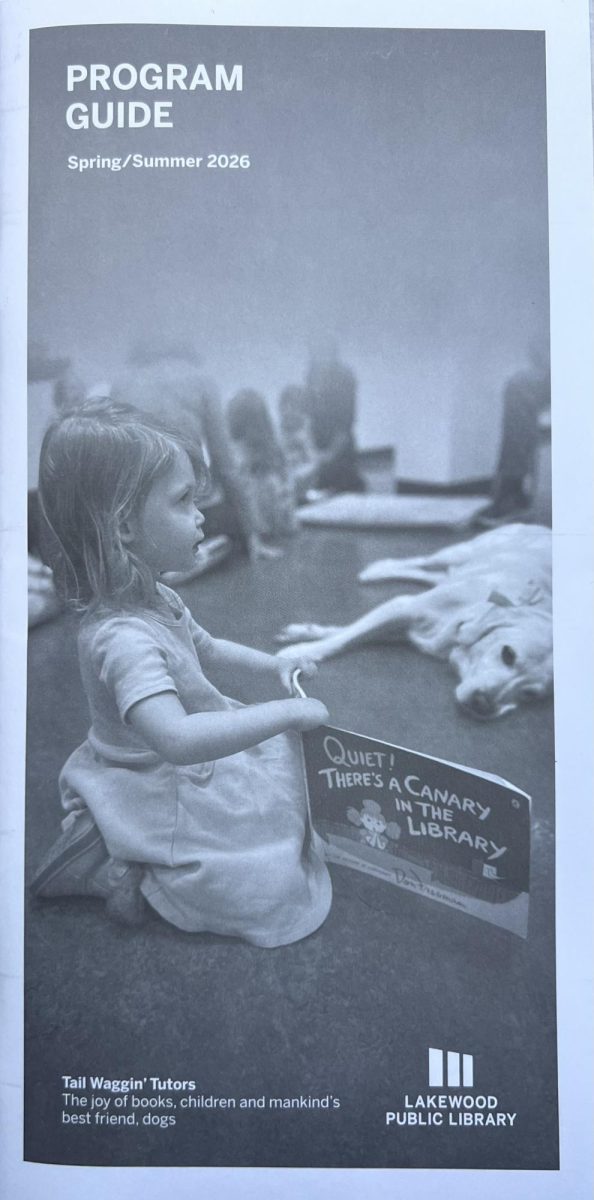
Once a month, kids gather for one of the library’s most unique and heartwarming programs, Tail Wagging Tutors. Instead of reading to a teacher, parent or even a classmate, they sit down with a certified therapy dog and read out loud.
It might sound unusual at first, but for many kids, it’s exactly what they need to build confidence and actually enjoy reading.
For parent Lori Dean, the program has become part of her family’s routine. “We’ve been coming to the Lakewood Library since he was a baby, so we saw it on the website,” said Dean.
What started as something new to try quickly turned into something they look forward to every month.
“I guess just helping him with his reading and just being out with other people and dogs, he just really liked it when we got here. So we read this every month,” said Dean.
And it’s not just about reading — it’s about confidence.
“He is still working on his confidence reading in front of people; the dogs are, you know, like she said, they’re not judgmental, so he likes that. But yeah, he’s getting better, and it’s helped him, and whoever runs this has kind of seen him progress throughout this time,” said Dean.
That no-judgment factor is exactly what makes the program so special. According to librarian Marge Foley, that’s the whole idea behind Tail Wagging Tutors.
The program is run by volunteers who bring in certified therapy dogs, creating a calm, welcoming environment for the kids to practice reading.
“Well, we have volunteers who bring their dogs, who have been certified through Therapy Dogs International, and they … really do the whole program. We provide the space for them, but they want to share their dogs with the world,” said Foley.
These aren’t just any dogs. They are trained to be calm, patient and friendly, even if they look a little intimidating at first.
“The dogs are very nice. They’re very calm. Some of them are very large and intimidating, but then they just sit there or lay there, and they don’t move, and then they’re not intimidating,” said Foley.
This results in a low-pressure environment where kids can simply sit and read.
“This gives young children the opportunity to read out loud. They’re reading out loud to a dog, but the dog isn’t correcting them or telling them that they mispronounced a word. So it’s the whole premise of it is it increases fluency if a child can read like that,” said Foley.
Unlike reading at home, where a parent might stop a child to correct mistakes, reading to a dog allows kids to keep going and build a natural rhythm. “This way it flows more … it increases fluency. So that’s we’re all about reading here at the library,” said Foley.
The program itself has been around for years and continues to grow in popularity. It began when a group of therapy dog volunteers approached the library with the idea.
“They presented [the library] with this idea: ‘We would like to bring our dogs here once a month and provide this opportunity for children.’ It’s been going on for quite a few years, and it’s very successful,” Foley said.
You can tell it’s successful just by walking in the room. “People walk out of there with a smile on their face. The kids enjoy it. The parents enjoy it,” Foley said.
Even children who aren’t quite reading yet still benefit from the experience. “Sometimes they’ll be like a four-year-old standing outside and peeking in at the dogs, and they can’t read yet. But the owners of the dogs, especially if it’s not too busy, will call the kids in and say, ‘Oh, you want to come in? You want to meet the dogs?’” said Foley.
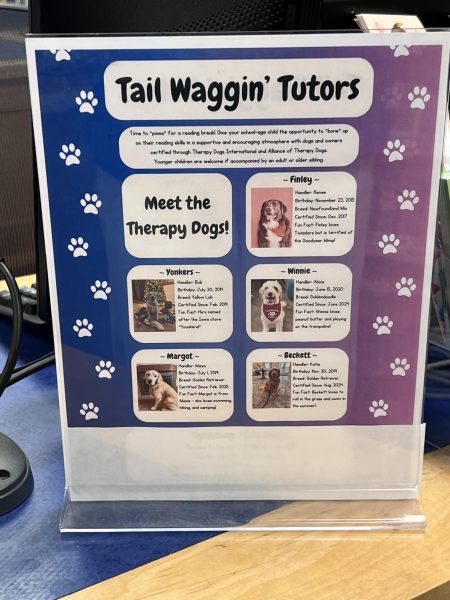
For the volunteers, it’s just as rewarding. Dog owner Maya Baier brings her therapy dog, Margot, to the program and she sees firsthand how much the kids love it.
“Depends on the age, but the kids are usually really excited to give Margot lots of pets. Lots of pets. She’s a good listener,” said Baier.
Margot isn’t just there to sit quietly; she interacts with the kids in her own way. “If Margot wants more pets, she’ll just kind of use her paw to let you know she generally likes it when people are actively petting her,” said Baier.
Over time, children start to feel more comfortable—not just with their reading, but in the entire environment. “Yeah, I think it’s really cool that there are a lot of people who come back and so they know her, and they seem very comfortable grabbing a book,” Baier said.
And just like Dean mentioned, Baier agrees that the dogs play a huge role in helping kids feel safe.
“I think dogs are really good, non-judgmental listeners. I think you feel very safe to be reading to an animal, just in terms of getting confidence for reading and sounding out words. They’re patient,” said Baier.
Instead of worrying about messing up a word or being corrected, kids can focus on the story, the experience and the dog sitting right next to them.
One of the best parts of Tail Wagging Tutors is that it doesn’t cost anything for the library to run. The volunteers donate their time simply because they want to share their time with their dogs and help kids.
“It doesn’t cost the library any money, because the people are doing this just out of the goodness of their hearts,” said Foley.
In a world where a lot of things feel stressful, especially for students, Tail Wagging Tutors is a reminder that learning can be fun, supportive and even a little more relaxed.
Whether it’s a nervous reader building confidence, a dog happily soaking up attention, or a parent watching their child improve month by month, this program is clearly making an impact.