














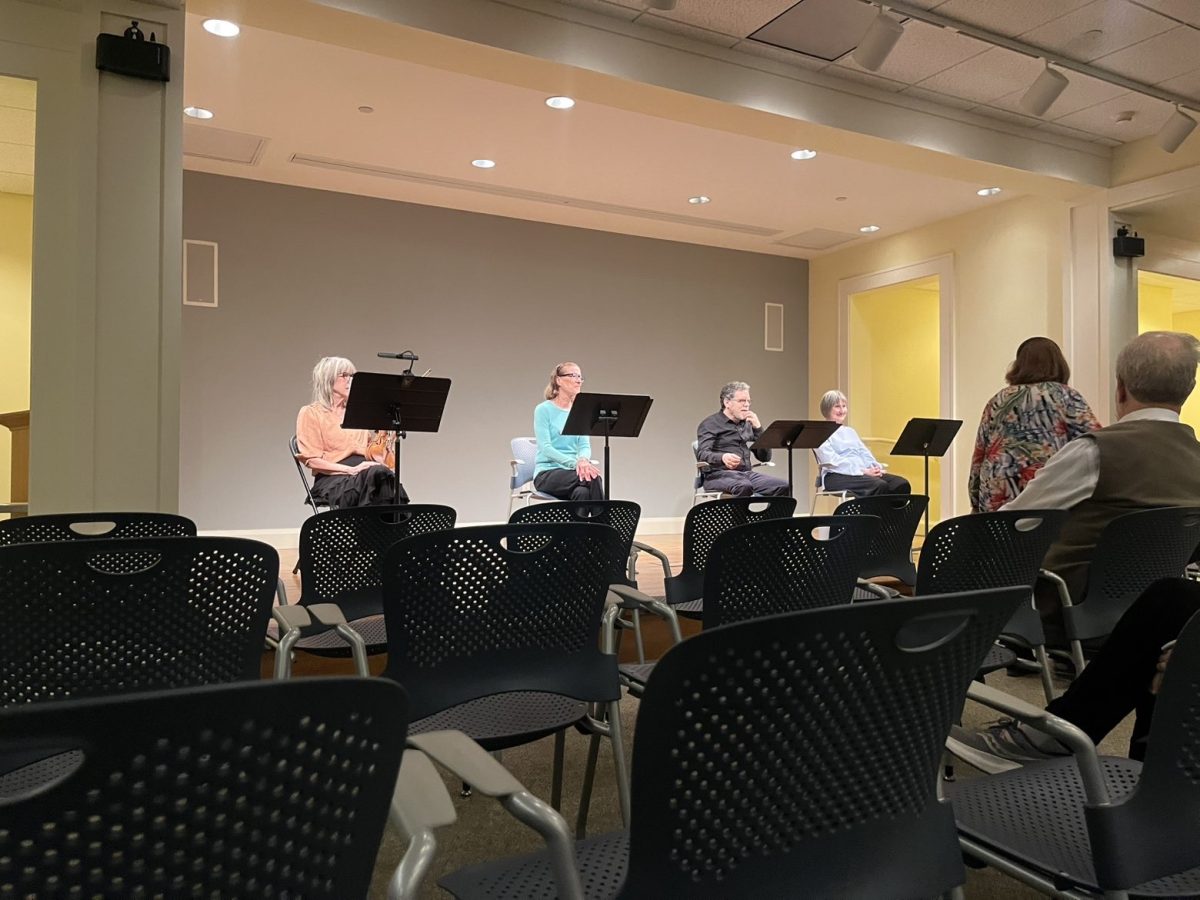
On March 29, 2026, Wordstage II performed “Literature, Poetry, Theater, and Music: Dear Miss Breed: The Children’s Librarian Who Made a Difference” in the main auditorium at the Lakewood Public Library.
Wordstage II is a performance group consisting of violinist Mary Beth Ions and actors Agnes Herrman, Douglas Sutherland and Leslie Stager. The group focuses on historical subjects, building performances that combine storytelling, music and primary sources.
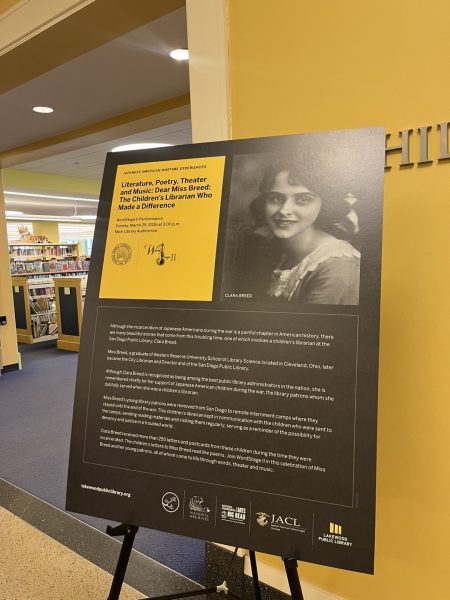
Clara Breed, born on March 19, 1906, was an American librarian known for her overwhelming support for Japanese children during World War II. Following the attack on Pearl Harbor on Dec. 7, 1941, Japanese Americans faced widespread discrimination.
On Feb. 19, 1942, President Franklin D. Roosevelt signed an executive order establishing military zones, leading to the forced relocation of more than 120,000 people of Japanese ancestry to internment camps across the western United States.
Breed began working as a children’s librarian in San Diego in 1928. Many of the children she worked with were Japanese American and were later sent to internment camps in Arizona. The performance drew heavily from real letters exchanged between Breed and these children. Through this correspondence, Breed became a trusted source of support as they navigated life in the camps.
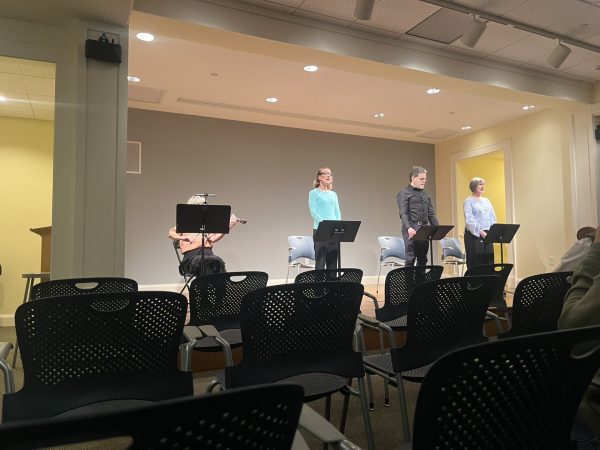
The program blended theater, music and historical documents. At the start, Ions performed “Sakura,” a traditional Japanese song symbolizing hope and the fleeting nature of life on her violin. She also played “God Bless America” by Irving Berlin to reflect themes of patriotism during the era. Later in the performance, she played pieces such as “In the Mood” by Glenn Miller, a song from the 1940s that is full of energy and romantic tones. She also played “Stardust” composed by Hoagy Carmichael, which is another romantic piece.
Ions said, “The music really punctuates all of these different things and brings everything together…the music tells a story in its own way.”
Much of the performance centered on letters and speeches. Stager, portraying Breed, read from real correspondence with children in the camps, while Herrman and Sutherland portrayed the children and shared their responses. Hermann and Sutherland played many of the children that Breed was writing to and shared their real letters that they were writing back and forth to Breed
Audience member Evelyn Quinlan said, “For me, the most valuable part of this whole performance was probably knowing that these children were real people…understanding that this didn’t happen in our history that long ago makes you think about what they went through.”
Actors also performed speeches from historical figures. Eleanor Roosevelt, portrayed by Herrman, read from her “My Day” column, including the line, “courage belongs to no one race and no one religion.” The performance also included Franklin D. Roosevelt, portrayed by Sutherland, adding further historical context.
The program balanced factual history with emotional storytelling. The script highlighted connections between events of the 1940s and present-day issues. Herrman said, “It’s like people never learn their lesson…it hurts to hear about this again because it just reminds us of what our country is currently going through.”
Clara Breed’s story serves as a reminder that even during times of injustice, individual acts of kindness and compassion can leave a lasting impact.