


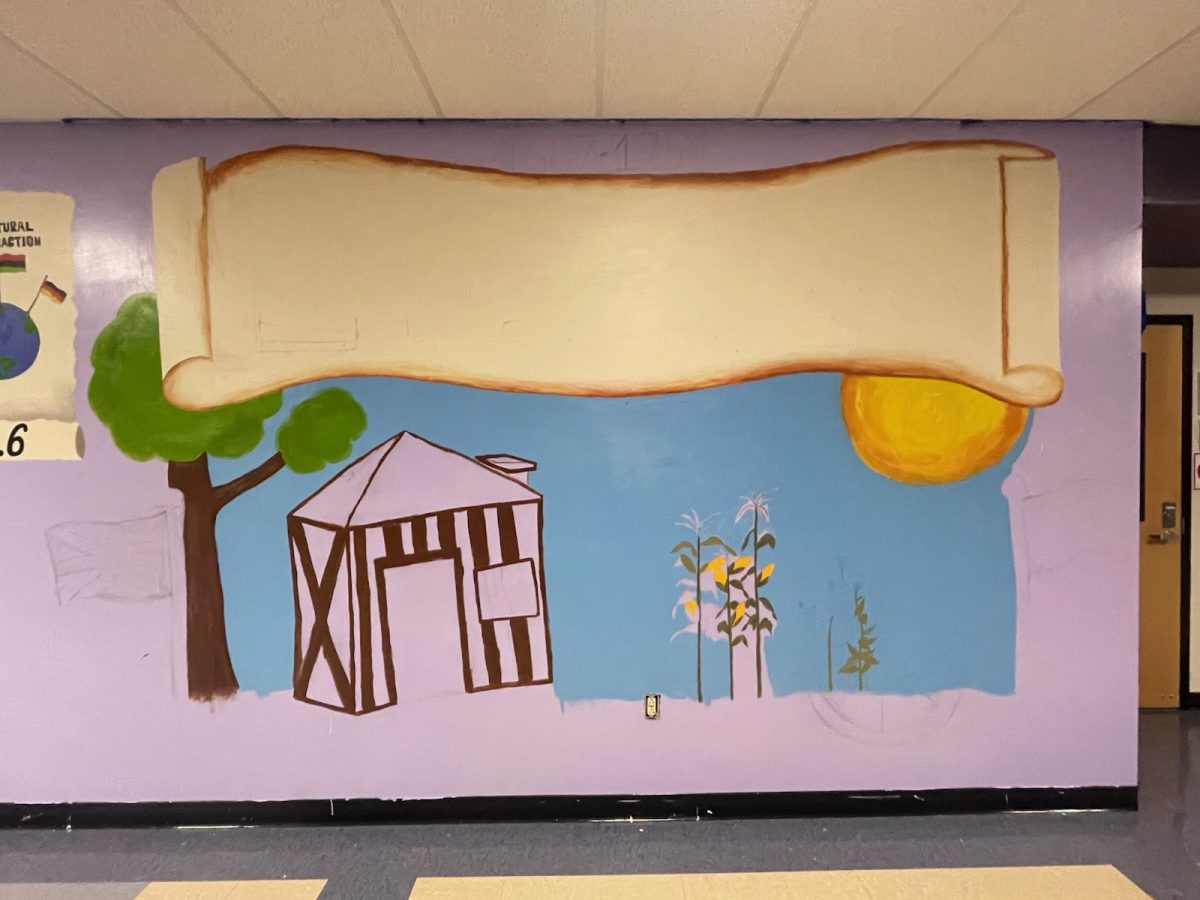
Every year, students in Tim Rinehart’s classes create hallway wall art near the end of the school year. In addition to decorating hallway walls, students also paint classroom walls with a timeline map that is used throughout the course.
This tradition began in 2019 with Rinehart’s US History class and AP U.S. History classes. Every year, Rinehart would pick a few kids to paint a map on his wall. Once he ran out of space in the classroom (and ran out of maps), he shifted gears.
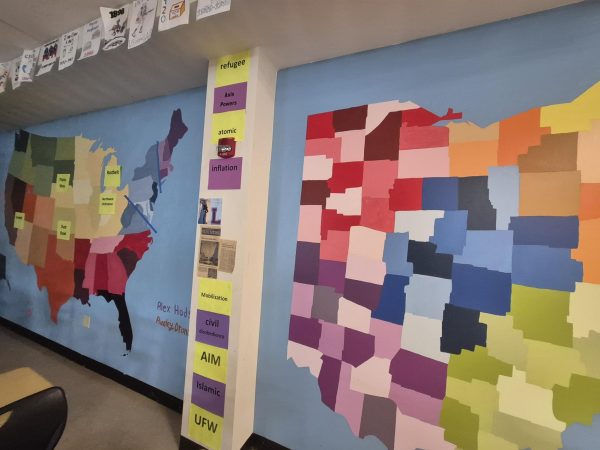
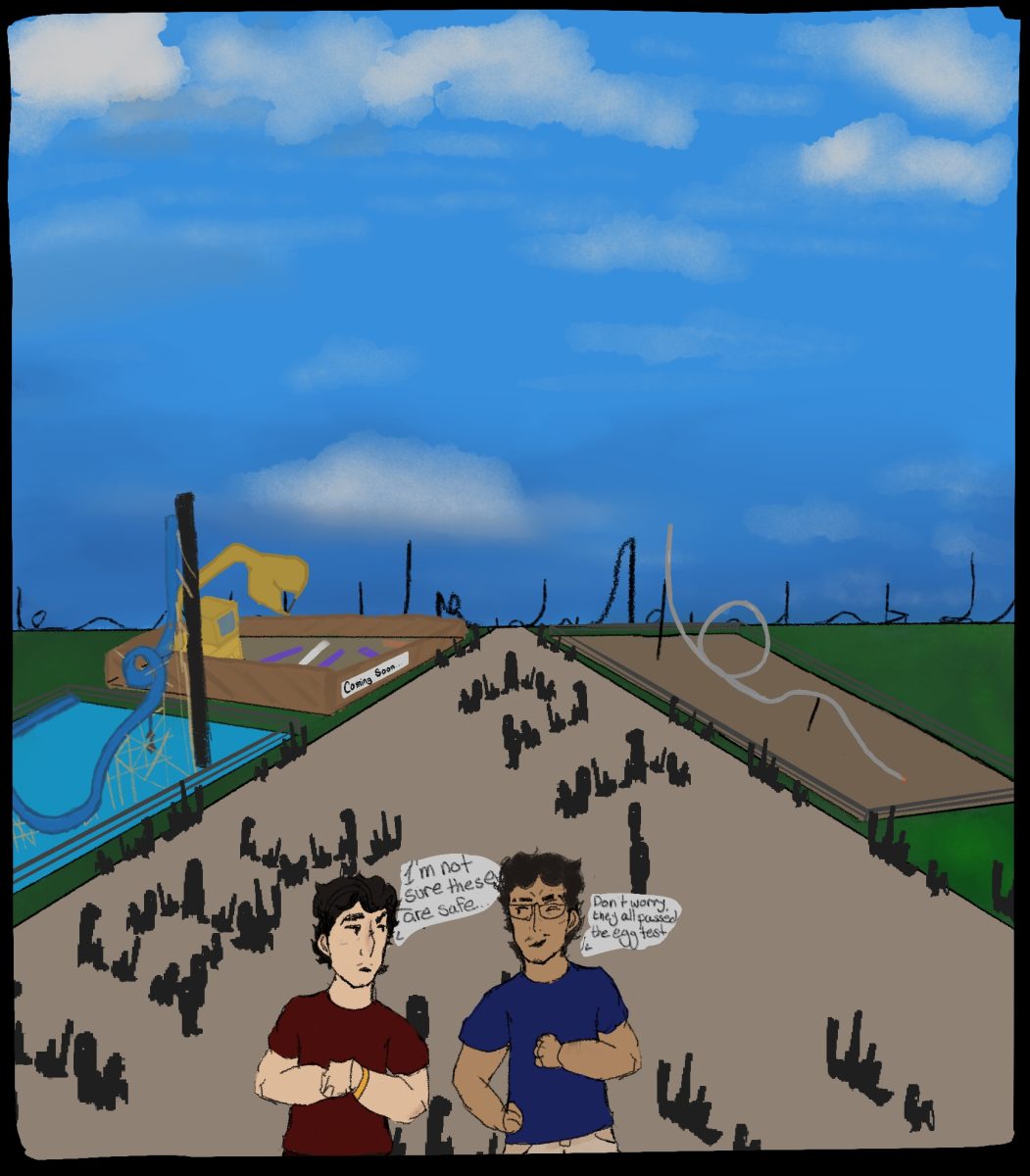
Now each class is assigned a segment of history they have studied, sometimes reaching as far back as 1415. The project uses the hallway space to build a shared visual timeline based on student-selected historical periods.
The project is designed to increase student engagement with historical timelines. Students also connect with previous participants to learn how earlier versions of the project were completed.
“It keeps getting close to like nowadays…[it’s crazy that] today will be history in like 3 years,” said Graham McAlvey, former student participant.
Participation is optional, allowing students to choose involvement based on interest and availability. The project also provides an opportunity to create a resource that supports exam preparation.
“[It] makes freshmen more excited for the possible opportunity to be able to paint the wall next year,” said Olive Lopez, a sophomore in Rinehart’s class.
The hallway murals also serve as a visual learning tool, particularly for students who benefit from spatial or visual instruction. Rather than relying only on lectures or notes, students can see historical events arranged in sequence.
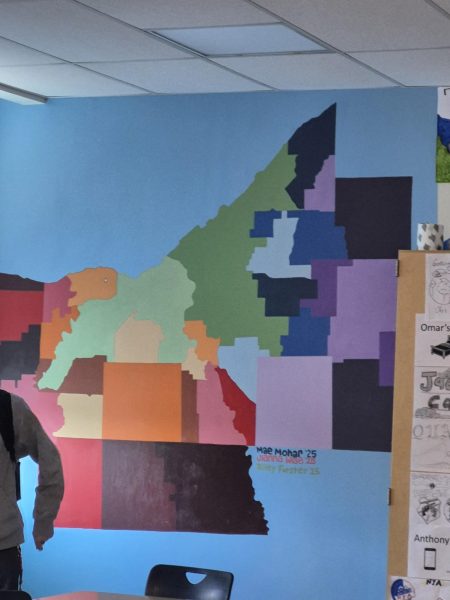
This project also emphasizes collaboration and time management, requiring students to work together under a clear deadline at the end of the year.
“I think it’s become a thing where students who are asked to participate in it are pretty excited about it and into it, and other students notice that,” Rinehart said.
Unlike most classes, this project allows students to create public-facing work that other students and staff see daily. It is used in both AP and standard U.S. history courses, expanding its reach across different student groups.
The murals serve as a lasting legacy for each class and help connect students through a shared academic experience. They also provide a creative way to engage with historical content.
Overall, the yearly wall art project in Rinehart’s classes has become more than just a creative activity—it is a hands-on way for students to engage with history in a lasting and meaningful format. By turning timelines into something visible and interactive, the project helps students better understand historical connections while also building collaboration, responsibility, and pride in their work. As each new class adds its own section to the hallway, the murals continue to grow into a shared record of learning that connects students across years.