















At the April 15 meeting of the Lakewood Animal Safety and Welfare Advisory Board (LASWAB), board members reviewed updates on Animal Control and discussed the growing need for monthly food donations through its partnership with Lakewood Community Services Center (LCSC).
LASWAB advises the city on proposed changes to ordinances within the municipal borders of Lakewood. This board has accomplished several initiatives that showcase its efficacy.
“We just finished a two-year cycle of changing the TNR – Trap, Neuter, Return – ordinance that just got passed two months ago. That was two years of research, of lawyers, of working with the city, and getting everything together … We [LASWAB] also did spay and neuter day for residents’ cats [through a grant], and we did over 500 [surgeries] over the course of seven years,” said Nancy Binder, the board chair.
The meeting began around 6:05 P.M. Binder and board secretary Emily Christescu spoke with the press about LASWAB’s responsibilities, the relocation of the Animal Shelter from the Metroparks to 12910 Berea Road, and estimates of Lakewood’s stray cat population, which ranges from 3,000 to 7,000.
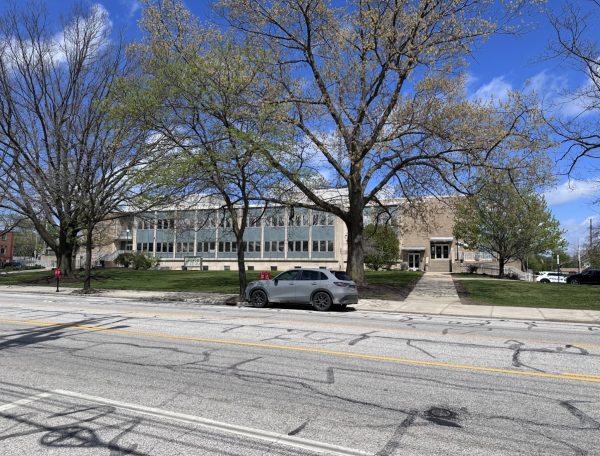
Binder began by asking the Animal Control Officer Gary Crumley about updates from the Animal Shelter. Crumley explained that the shelter is in the process of installing new software designed to streamline operations, including animal registration and a public-facing website.
The system will also allow Lakewood residents to report missing animals and flag possible matches, improving the process of reuniting pets with their owners.
Crumley also provided a spreadsheet outlining key shelter statistics, including the number of animals impounded, adopted, bite investigations, and wildlife encounters. As of April, two animals remained at the shelter: a cat named Bubbles and a beagle named Patches, estimated to be between two and five years old
Binder then asked Crumley to explain the animal shelter’s policy on owner surrenders. Crumley said, “because we’re smaller, if we took owner surrenders, we’d be full in a heartbeat, and then we wouldn’t be able to handle what we get. So basically, we just deal with stray dogs [and] stray cats. Usually, we don’t have a lot of dogs at the shelter, because if we get a stray, normally the owner comes looking for it, so they get reclaimed fairly quickly.”
After discussion of Animal Shelter operations concluded, Binder and Christescu shifted their focus to discussing updates on the food drive that LASWAB has been developing with LCSC.
Within the municipal borders of Lakewood, there are few formal resources that provide pet food assistance, aside from Berea Animal Rescue Friends. This gap has increased the importance of LASWAB and LCSC’s food drive efforts.
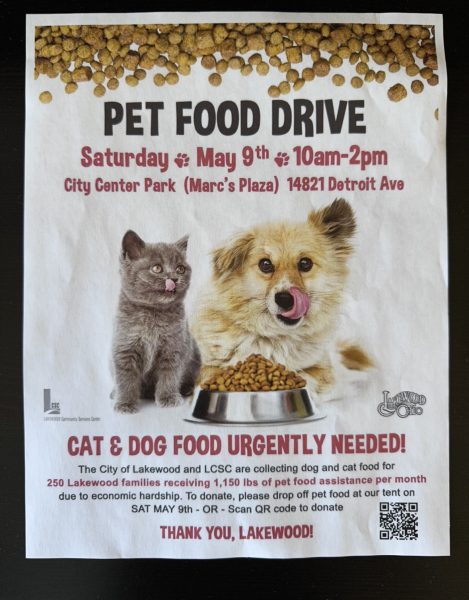
While LASWAB and LCSC hold biannual food drives, officials noted that the need extends beyond those events and requires consistent monthly support.
The Board Secretary, Emily Christescu, then went over the specifics of what the drive provides compared to the growing need. “The last report [LCSC] gave us as far as their needs [was] that there are 139 cat households, 67 dog households, and then a combination of 40 cat plus dog households. Then they let us know that the kibble needed would be 716 pounds for cat food, and then 428 pounds of dog food, totaling 1144 pounds of kibble each month. That was the latest recap they gave us as far as what their [recipients] needed. But this has grown exponentially since we started this whole [program in 2021]. Right now, they have 250 [households] that are receiving assistance for their pets,” said Christescu.
After everything regarding the food drive was discussed, the press was permitted to dismiss themselves for the board to further discuss protocol.
What stands out from this meeting isn’t just the updates themselves, but how much of LASWAB’s work depends on steady, ongoing coordination between the city, volunteers, and partner organizations. The discussion made it clear that animal welfare in Lakewood isn’t driven by one program or one solution, but by a network of efforts trying to respond to real and growing needs. As those needs continue to shift, the board’s role stays centered on turning data, resources, and community input into action that actually reaches the people and animals who rely on it.