



If you’ve ever walked, biked, or driven across the Clifton Bridge between Lakewood and Rocky River, you’ve probably noticed one thing: it doesn’t feel especially safe or welcoming. Cars speed by, the bike path is narrow, and the stretch feels more like a highway than part of a neighborhood. The Clifton Lake roundabout project aims to change that.
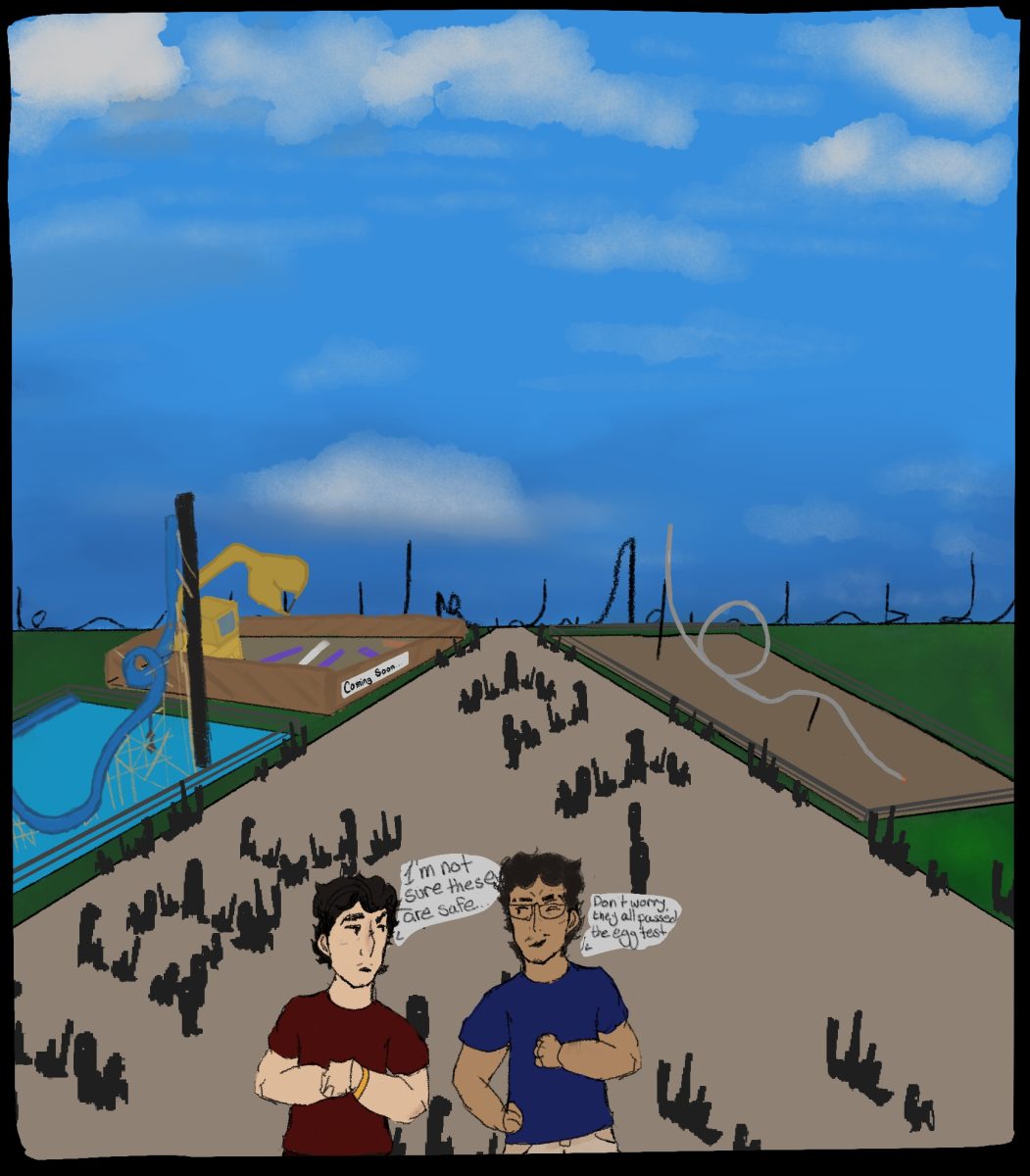
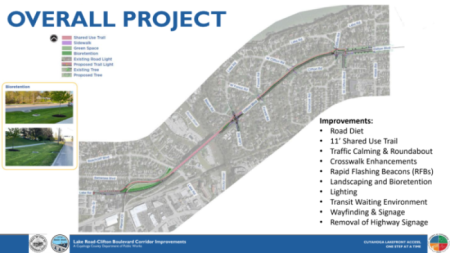
The project will convert a 1.2-mile stretch from Webb Road in Lakewood to Linda Street in Rocky River into a more neighborhood-friendly corridor. Plans include a new bike and pedestrian trail, a roundabout, updated lighting, additional trees and a bioretention system. The goal is to calm traffic, improve pedestrian and bicycle safety, and reduce the highway-like feel.
One of the main issues the project is addressing is speeding. “I think the idea was for traffic calming,” said project manager Trevor Hunt. Even though the speed limit is around 35 mph, that’s often not the reality. “We know that cars far exceed that … they’re going 40, 45 easily over that bridge,” Hunt said.
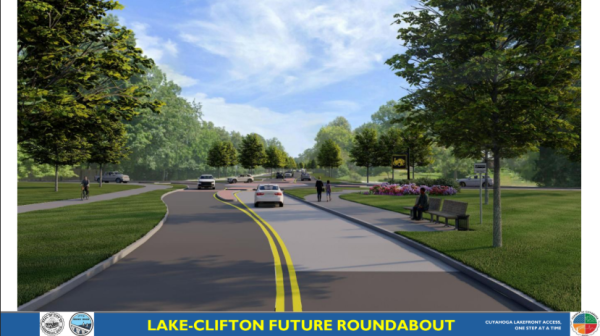
The roundabout is a key solution. Unlike a traditional intersection, it forces drivers to slow down. “You have to be down to about 12 miles per hour by the time you enter the traffic roundabout,” Hunt said. Slower speeds don’t just make traffic calmer—they make it safer.
Eric Mack, section chief of engineering for Cuyahoga County Public Works, noted that roundabouts also reduce the risk of serious crashes. At traditional intersections, left turns across traffic can lead to dangerous collisions. “Whereas in roundabouts, you’re always going right. And so if there’s going to be an accident, there’s not going to be a head-on collision … it’s just your two cars bumping,” Mack said.
But the project goes beyond traffic flow—it’s about reconnecting the community.
“It used to be a cohesive neighborhood tied in together,” Hunt said. Over time, the road created divisions between streets that were once connected. Now, the goal is to restore that sense of unity. “This project … is trying to better connect how it originally was,” Mack said.
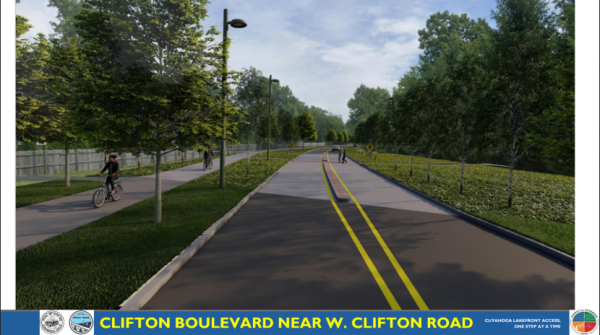
A major addition will be a dedicated bike and pedestrian path. Instead of four lanes of traffic, part of the road will be repurposed into an 11-foot-wide trail, giving residents a safer way to walk and bike.
“We thought the best would be to put the pedestrians up against the lakeside,” Mack said, noting that it will also provide scenic views of Lake Erie.
The project will also include about 150 new trees, updated lighting and landscaping improvements to make the area more inviting. “If you drive that corridor today … you’ll see that it’s kind of barren and just highway-esque,” Mack said.
Environmental improvements are also part of the plan. “We’re going to put a bioretention [system] in,” Mack said. The system will allow water to collect and be absorbed by plants rather than flowing into the sewer system, making the project more sustainable.
The planning for the project has been years in the making. “It was 2020 when it started to gain traction,” Hunt said. The process included about two years of planning followed by two years of engineering before construction could begin.
Construction is expected to last about 18 months. “It’s gonna be less than two years. So construction starts on Monday, April 20 and I think we’re saying it’s going to be wrapped up by late fall 2027,” Hunt said. Due to Northeast Ohio winters, most of the work will happen between April and November.
The Clifton Lake project is also part of a broader effort to improve public access to the lakefront. “We were looking … for opportunities to create pedestrian-friendly areas,” said Michael Dever, director of Public Works for Cuyahoga County.
Despite the county’s 32 miles of shoreline, access remains limited. “Less than 20% is public,” Hunt said, meaning most lakefront property is privately owned. Projects like this aim to improve accessibility for the wider community.
While construction may bring temporary inconvenience, the long-term impact could be significant. The project is not just about fixing a road—it’s about reimagining the space. Instead of functioning like a highway, the Clifton corridor may finally feel like part of the community again.