












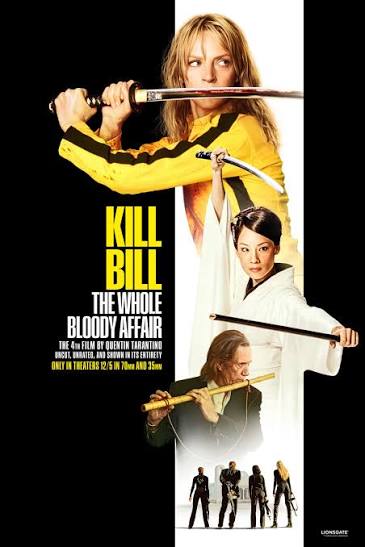
In October 2003, Quentin Tarantino released his fourth film, “Kill Bill: Vol. 1,” with the second half, “Kill Bill: Vol. 2,” following in April 2004. While technically separated into two films, Tarantino has always viewed both volumes together as one film — the fourth installment in his 10-film plan. Many years after the initial release, Tarantino’s true vision is finally finding its way to the big screen as “Kill Bill: The Whole Bloody Affair.” “Kill Bill: The Whole Bloody Affair” is a four-and-a-half-hour theatrical experience that combines both volumes into one viewing. It features an extended anime sequence, restored uncensored violence, a removed cliffhanger and recap, and a newly placed intermission.
The removal of the cliffhanger at the end of the first half strengthens the reveals in the story’s conclusion and provides a more emotional final act that genuinely surprises first-time viewers. In their original releases, the two films were already split into chapters, which made the transition between the first and second volumes feel less dramatic.
Watching the two parts as one film makes the stylistic shift between them far more apparent. “Kill Bill: Vol. 1” draws heavily from samurai and martial arts cinema, while the second half adopts the atmosphere of a Western. While the difference is less noticeable when viewed months apart, experiencing the full story in one sitting makes these shifts much more evident. This transition allows the second half to feel more personal while maintaining a large sense of scale.
Even in this rerelease, the film maintains the original aspect ratio, color grading, and visual style of a movie shot on film. This, combined with Tarantino’s signature direction, makes “The Whole Bloody Affair” visually distinct from most modern digital releases. Some visuals were altered, however, to align with Tarantino’s original vision.
The restored, uncensored violence enhances the film’s fantastical, over-the-top tone. Although both original cuts were rated R, certain scenes were shortened to avoid an NC-17 rating. “Kill Bill: The Whole Bloody Affair” remains unrated, allowing Tarantino’s signature whimsical violence to remain intact.
One of the most substantial changes occurs in the first half, where the anime sequence depicting O-Ren Ishii’s backstory has been greatly extended. This adds significant depth to her character, making her even more intimidating when she finally faces the protagonist, The Bride, played by Uma Thurman. Volume 1 would be almost difficult to watch again, knowing what is missing without these expanded scenes.
Aside from the structural changes, seeing these films return to the big screen highlights why Tarantino is regarded as one of the greatest filmmakers of all time. His masterful use of color — and the striking absence of it in black-and-white sequences — adds immense depth to the world. The choreographed fight scenes strike a balance between the fantastical and the grounded, keeping viewers glued to the screen.
After years of being viewed as a two-film saga, Tarantino’s true vision has finally reached the theater. Improving on two of the greatest films ever made is a tall order, but Tarantino accomplished it, creating a four-and-a-half-hour epic of revenge, betrayal, and love. “Kill Bill: The Whole Bloody Affair” is the definitive way to experience this masterpiece.
