











Blending 19th-century Russian Literature with modern music and immersive storytelling, Natasha, Pierre, and the Great Comet of 1812 explores love, uncertainty, and identity through the theatrical lens.
Performing March 26-28 in the Civic Auditorium, the Lakewood High School Barnstormers brought Lakewood alumnus Dave Malloy’s gene-defying musical to life on stage. Malloy began developing his theatrical voice during his time in the program, making this production a full circle for the show as it returns to the beginning of Malloy’s journey.
Choir teacher and music director Rayna Brooks highlighted a special musical cue that goes unnoticed to the untrained ear, a motif that emphasizes the cycle of life that Natasha goes on.
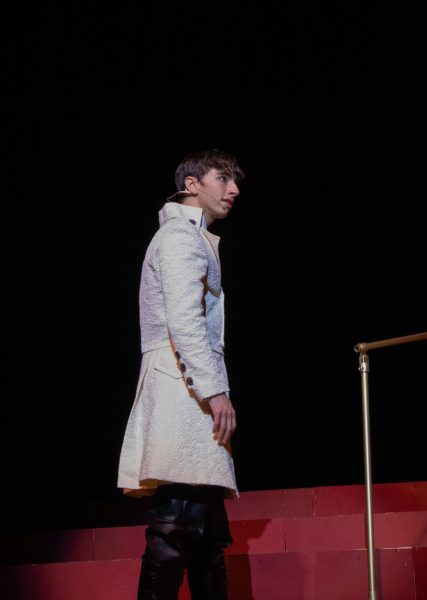
“We spoke with Dave Malloy, who wrote the show, and he pointed out something that a lot of us hadn’t picked up, and it’s that every time you hear those computery sounds, like it happens the first time when Anatole walks into the room, because he kind of throws a wrench into Natasha’s life,” said Brooks. “Every time he’s on stage, we get it, and the last time we get it is when Natasha poisons herself.”
Brooks also explained the reason why Natasha, Pierre, and the Great Comet of 1812 was picked.
“When we picked the show, we were sitting and talking through a list of shows, and Comet has been on the list for a few years,” Brooks said. “The senior class has very strong singers, and so do the juniors and sophomores. We learned a lot from Les Mis last year, and we were like, ‘This is kind of the perfect time to do it.’”
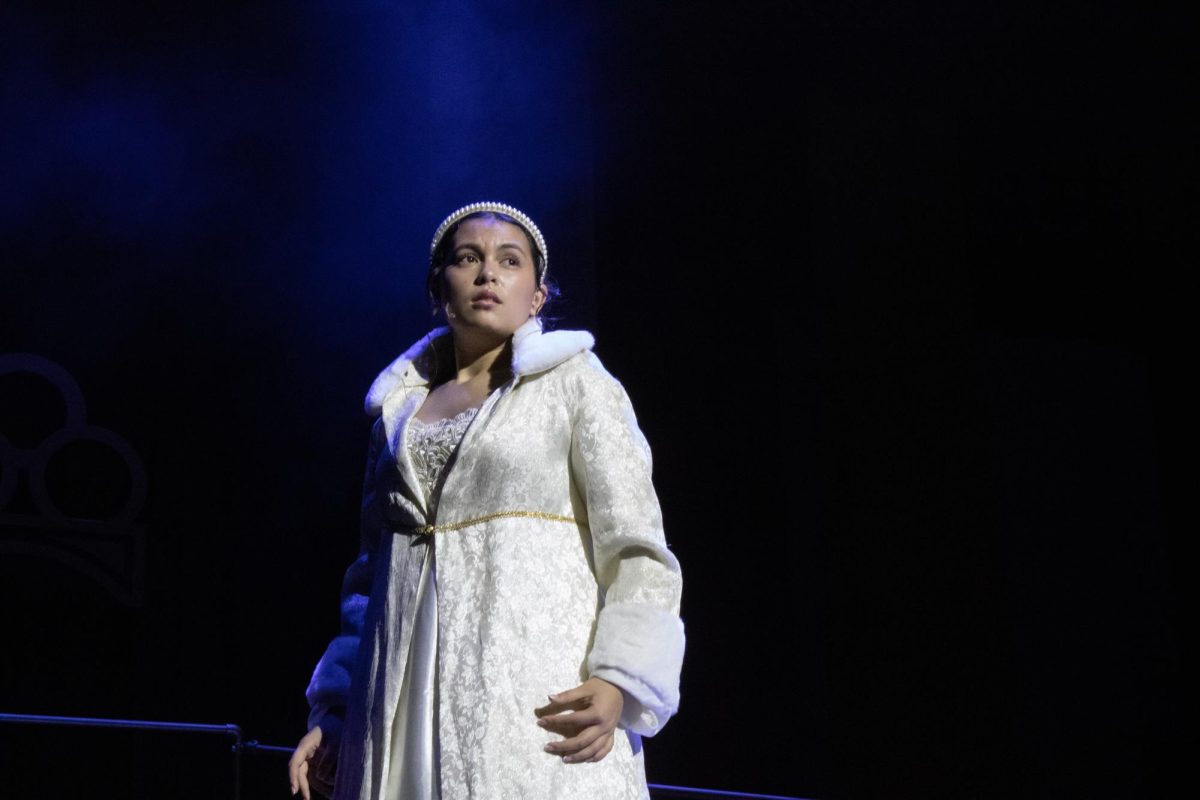
Senior Coralie Barcelona, who played Natasha, captured the character’s emotional complexity as she navigated the journey between love and uncertainty throughout the production.
“The end is never really the end,” Barcelona said, “She’s struggling a lot with the fact that she thinks she has ruined her life forever and that it’ll never go back on track. It takes the outside influence of the character of Pierre to remind her that she’s still a young woman and she can still recover from it, and be able to remain her own person, and still find love, and still find success, and what she wants in her own life without thinking the end is here.”
Barcelona’s insight underscores the emotional weight of the role and Natasha’s journey towards self-acceptance.
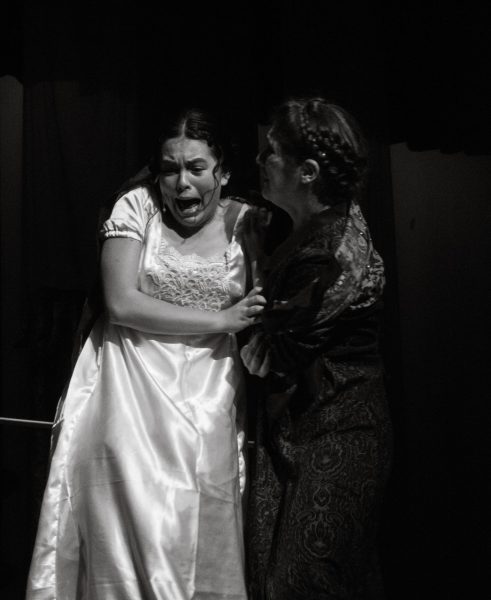
“This show catches Natasha at such a pivotal point for her character in the book [War and Peace] as a whole,” Barcelona said. “It’s such a pivotal turning point for her, because the Natasha you see at the beginning of the musical is not the same Natasha that you will see at the end.”
Relating back to the novel by Leo Tolstoy, Barcelona noted the parallels between the novel and the musical, showing how the impulsiveness and personal growth of the characters translate from page to stage.
“Natasha is so dynamic. It’s kind of taught me that I am that too, and that I’m able to play that as well, because I see so much of myself in her,” Barcelona said. “It’s really such a gift to be able to portray her fall from grace every single day, because every day I’m able to find something new—new motivation for her, a new reason that she ended up doing what she was doing.”
While the cast worked on developing their characters and nailing their choreography, the pit orchestra faced unique technical and musical challenges.
“It’s extremely rewarding when we can lock together with the cast, but it’s definitely been one of the things that has been difficult for us to get together,” said senior Alessio Matera, a bassoonist and the director’s assistant in the pit orchestra.
Despite these challenges, the effort has paid off, as reflected in the synchronism that takes effect on stage.
The pit orchestra sat on the stage this year, becoming a part of the cast in the notoriously immersive show. The musicians become characters, with some even walking around and working to add layers to Natasha, Pierre, and the Great Comet of 1812.
“Because we’re sat on stage, we get to be a little bit part of the body language storytelling in a way that, in other shows, the pit doesn’t get to,” Matera said. “We also provide the base foundation that the actors can sing off of. We kind of do a lot of harmonies, and really fill it out and give some extra color and texture and different character to each song that wouldn’t normally be there if we’re off stage.”
The Lakewood High School Barnstormers currently await the Dazzle Awards nominations, which come out in late April. The Barnstormers were nominated for and won Best Musical (Tier 1) in 2025, and have received numerous other nominations in individual categories over the years.


![Wendla and Melchior find one another. Picture Credit: [ Yevhen Gulenko ]](https://lakewoodtimes.net/wp-content/uploads/2026/02/IMG_2062.jpeg)