










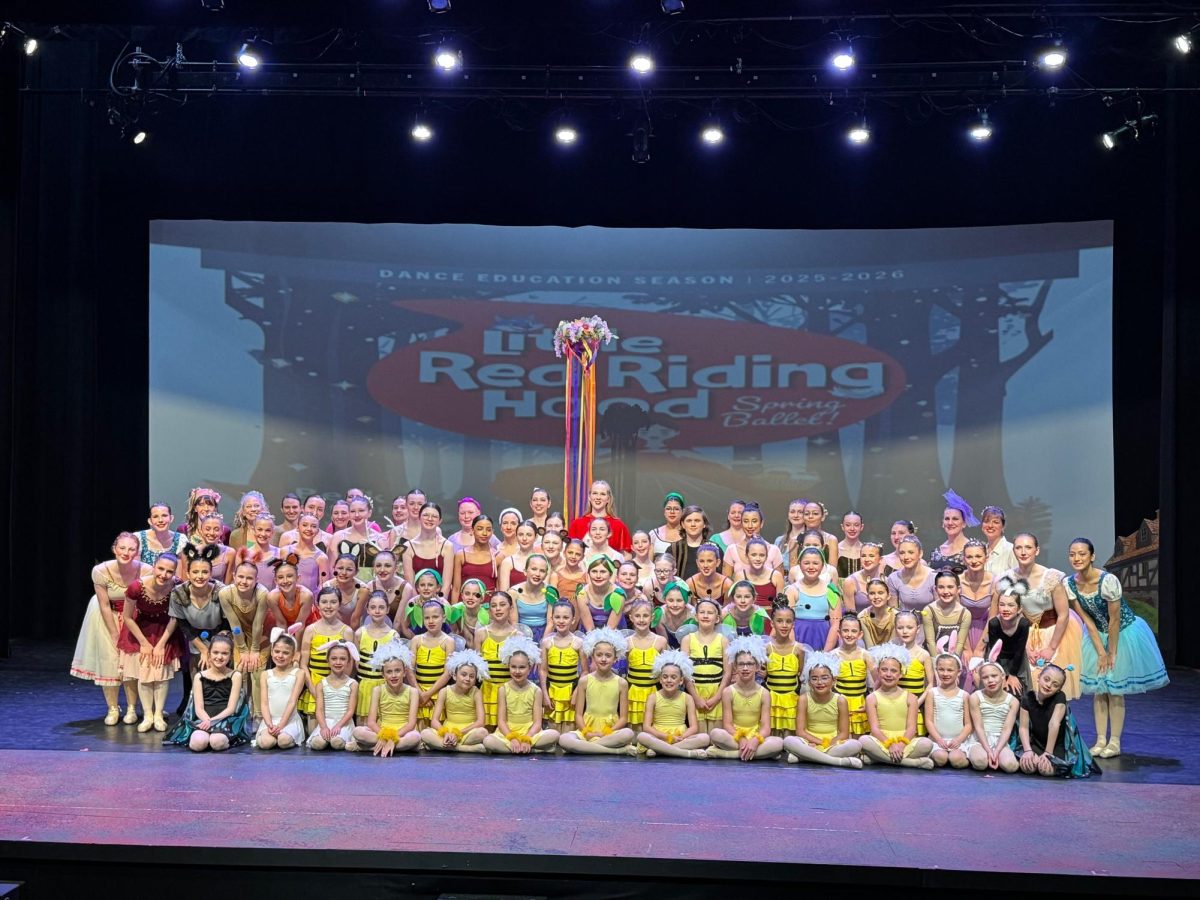
The Beck Center for the Arts presents Little Red Riding Hood, reimagined with ballet, transforming a familiar fairytale into a story driven solely through movement.
This production took place in the Senney Theater located in the main lobby from April 10-12, 2026.
“We held auditions the second week of January, and we’ve been rehearsing since the last week of January, so all in about 10 weeks,” said Director and Choreographer Melissa Yarur. The fast-paced production schedule required students to pick up choreography quickly and focus on development.
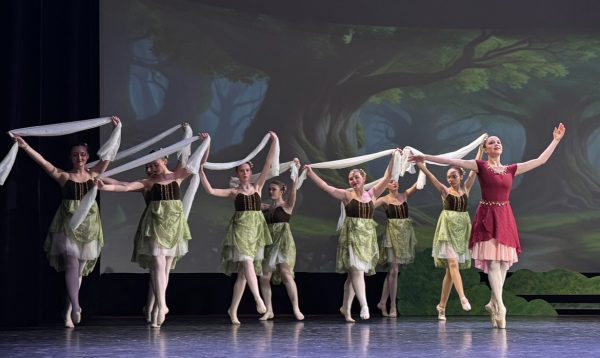
“I wanted to do something that was going to be a well-known story, and a well-known fairy tale, and fun overall,” Yarur said. “There was a lot of opportunity to do that with Little Red Riding Hood. So in our version of the story, no one gets hurt, no one gets eaten, no one gets killed.”
In the production, characters like Cinderella and Goldilocks develop as they help Little Red Riding Hood gather the ingredients she needs to bake a cake for the Spring celebration that the village hosts every year. A small play on the original fairytale, as the wolf still plays a crucial role in the ballet, but this time, no one’s being eaten.
“Ballet is all about joy,” Yarur said, “I really wanted the dancers to bring that quality of joy to their performances.” While ballet is often associated with being poised, Yarur’s approach highlights the importance of emotional expression onstage and offstage within the cast of dancers.
“Red Riding Hood is not a traditional ballet. The same way that the Nutcracker, Swan Lake, and Sleeping Beauty are thought of as ballets. There’s not a specific score that was composed for this version of Red Riding Hood.” Yarur said, “We have some Prokofiev, who is an early 20th-century composer, and then we have George Gershwin, who is an American composer, and then we have a lot of Strauss, waltzes, polkas, and fun European fairy tale type music. So bringing that kind of variety of music together is part of what makes a contemporary ballet.”
The use of varied musical influences challenged the conventions of what this ballet is defined as, offering a look into contemporary ballet and allowing each scene to take on a distinct mood and energy.
“My goal is for dancers to have the opportunity to shine and also share their joy of dance.” Yarur said, “Dancers express their emotion through dancing, and it’s very important to me that the dancers feel my joy and creativity and know that it is safe for them to also share that, and feel that, and I really want them to go on stage feeling positive and feeling confident.”
Yarur’s approach emphasizes a supportive rehearsal environment for everyone. Little Red Riding Hood is open to performers ages 7 and up. This production allows dancers to grow artistically, refine their technical skills and build confidence while experiencing their joy and love for dancing along the way.
“One of the messages in the ballet is about friendship, and misunderstandings happen, and that’s okay, and we can clear the air and apologize and still be friends and still get along,” Yarur said.
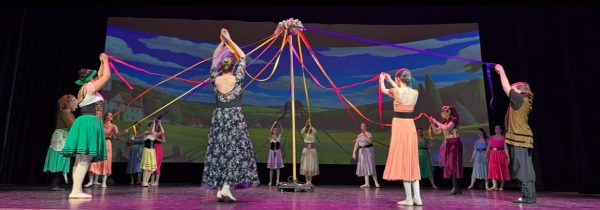
At the end, Little Red Riding Hood and the village forgave the wolf for the misfortune, a lesson that doesn’t come easy to most. This ballet teaches a message of forgiveness and showcases how misunderstandings can be resolved through dialogue and movement.
Mackenna Muzychenko, a sophomore at Lakewood High School, danced in both the Hunting Party and the Bunny Herder. Muzychenko has been involved in ballet at the Beck Center since the age of 3, and is a part of the Beck Center Workshop Apprentices.
“I remember the community that was made through this show because I connected with the younger girls, who are the bunnies, and they were always so happy to see me, and that connection made it feel more like a community,” said Muzychenko.
Interactions between the older and younger dancers help create a supportive, collaborative environment, forming connections and relationships that are evident on stage throughout the performance.
“Through the role of bunny herder, it felt like I could express more, like through what was going on in the scene, and act more on that so that it really helps the scene come alive when you have the opportunity to act while you’re dancing,” said Muzychenko.
Muzychenko’s reflection highlights how ballet performances move beyond just movement and technique. It requires dancers to embody characters and narrate a scene to the audience physically.
Nidea Stevenson is a longtime ballet dancer and a Junior at Lakewood High School. Dancing in both the Hunting party and as Goldilocks. She is also a part of the Beck Center Workshop Dancers.
“I have a lot of friends at Beck Center, so [being a Beck Center Workshop Dancer] means building those friendships and also building a legacy for all the other younger dancers to have, just like a friendship with all of the dancers,” Stevenson said.
Stevenson noted that the experience is more than just practice—a community is being built along the way.
“I’m not super close with any of the people who were playing the bears, so that was definitely a challenge to try and like, make it, I guess, more interactive with them” Stevenson said, “But I feel like as it went on, we all got more comfortable with each other, so we were able to kind of, I guess, be more interactive with each other and do different things during each performance to make us seem more friendly.”
As rehearsals and performances progressed, so did the chemistry among others, unfamiliarity among others shifting. The cast is growing familiar with each other, something evident even during their performances on stage.
With packed shows and heartfelt performances from dancers of all ages, the Beck Center’s Little Red Riding Hood reimagined ballet helped reflect not only the story but the community that helped bring it there.


![Wendla and Melchior find one another. Picture Credit: [ Yevhen Gulenko ]](https://lakewoodtimes.net/wp-content/uploads/2026/02/IMG_2062.jpeg)